Wisdom Teeth Removal
Wisdom Teeth Removal: What Eagle Mountain Patients Should Know
Wondering if your wisdom teeth need to come out? Here's what Eagle Mountain patients should understand about symptoms, timing, the procedure, and recovery.
Comfortable, carefully managed extractions that protect your oral health and set you up for lasting restoration success.
Sometimes a tooth has reached the point where saving it would do more harm than good. When decay, infection, trauma, or severe crowding leave a tooth beyond repair, a careful extraction protects the rest of your mouth and clears the way for a healthier, more functional smile. At Lake Mountain Dental, extractions are never treated as a last-minute fix - they are planned as a deliberate step within your broader restorative dentistry care, with an eye toward what comes next, whether that is a dental implant, bridge, or partial denture.
Our Eagle Mountain patients come to us with a wide range of situations: a cracked molar that has fractured below the gumline, wisdom teeth that are impacted and pressing on neighboring roots, baby teeth that refuse to loosen on schedule, or teeth so loose from advanced gum disease that they threaten the bone around them. In each case, our team evaluates the tooth, the surrounding bone, and your overall health before recommending extraction, and we always walk you through what your mouth will need afterward so you are never left wondering about the next step.
Most teeth give you warning signs before they reach the point of no return. Persistent pain, swelling, or a tooth that feels loose when you bite down are all signals worth paying attention to, and the sooner you have them evaluated, the more options you typically have. Below are some of the most common reasons we recommend extraction to patients throughout Eagle Mountain.
Not every extraction is the same, and the approach we take depends on how the tooth is positioned, how healthy the surrounding bone is, and whether the tooth has fully erupted through the gum. We take the time to review your dental X-rays and discuss your health history before choosing the gentlest, most appropriate technique for your situation.
Healing after a tooth extraction follows a fairly predictable pattern, and most patients are back to normal activities within a few days. The first 24 to 48 hours matter most, since this is when the blood clot forms in the socket and begins the healing process. We send every patient home with clear written instructions and are always just a phone call away if something feels off.
Beyond the initial healing window, it's just as important to think ahead about what fills the gap left behind. An empty space from a missing tooth can allow neighboring teeth to shift and opposing teeth to over-erupt over time, which is why we discuss implant, bridge, or denture options with you well before the extraction, not as an afterthought.
We understand that an extraction can feel intimidating if you haven't had one before. Our goal at every step is to explain what's happening, keep you numb and comfortable, and move efficiently so you can get back to your day.
We take a close look at the tooth in question along with digital X-rays to understand root shape, bone density, and proximity to nerves before recommending extraction.
We discuss the recommended approach, sedation options, estimated cost, and what to expect afterward so you feel fully informed before moving forward.
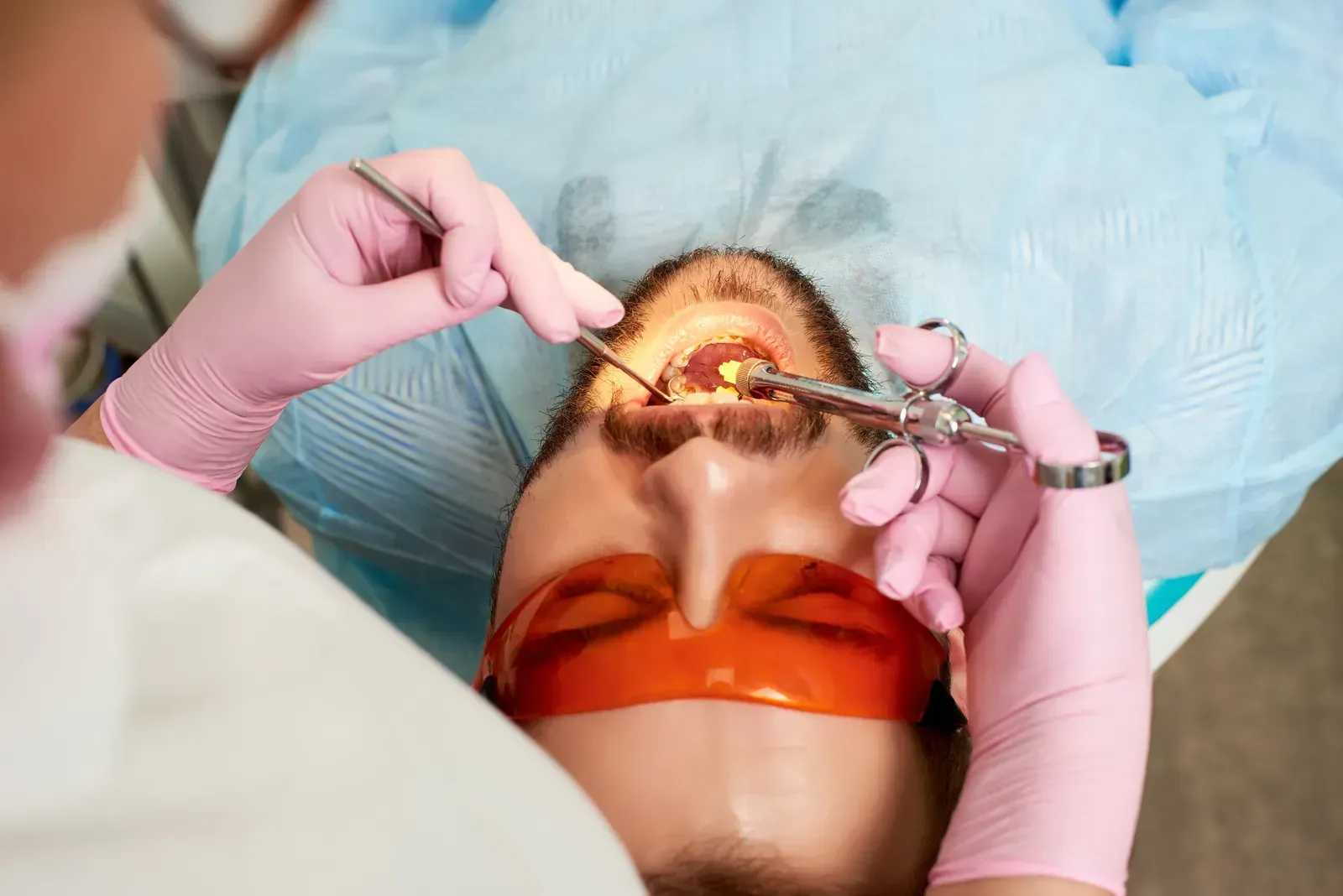
Local anesthetic is applied thoroughly, and sedation is added if needed, so you remain comfortable and relaxed throughout the entire procedure.
Using careful, controlled technique, we loosen and remove the tooth, taking extra time with impacted or fractured teeth to protect surrounding bone and tissue.
If a future implant is planned, we place bone grafting material into the socket right away to help preserve the jawbone's shape and volume.
We send you home with detailed aftercare instructions, pain management guidance, and a clear plan for scheduling your follow-up or tooth replacement consultation.
Extractions are a procedure patients remember, good or bad, and we've built our approach around making sure yours is as calm and predictable as possible. From the first consultation to your final follow-up, our team treats every extraction as part of a larger restorative plan rather than an isolated event.
Local anesthetic numbs the area thoroughly before we begin, so you shouldn't feel pain during the procedure itself, only some pressure as the tooth is loosened. Mild soreness afterward is normal and typically manageable with over-the-counter pain relief and the aftercare steps we provide.
Most patients feel significantly better within 3 to 5 days, though complete healing of the socket takes several weeks. Simple extractions tend to heal faster than surgical or wisdom tooth removals, which may need a bit more downtime.
In most cases, yes. Leaving a gap can allow neighboring teeth to shift and opposing teeth to over-erupt, which affects your bite over time. We'll talk through implant, bridge, or denture options during your consultation so you have a plan before the extraction even happens.
Dry socket happens when the blood clot protecting the extraction site is dislodged too early, exposing bone and nerve endings. Avoiding straws, smoking, and vigorous rinsing for the first few days greatly reduces this risk, and we'll give you specific guidance based on your procedure.
Yes. We offer nitrous oxide and other sedation options for patients who feel anxious or are undergoing a more involved surgical extraction. We'll discuss which option fits your comfort level and health history during your consultation.
Not always. When a tooth can be saved with a root canal, crown, or deep cleaning, we'll recommend that path instead. Extraction is reserved for teeth that are too damaged, infected, or compromised by bone loss to restore predictably.
Lake Mountain Dental
From routine cleanings to advanced care, our team is ready to welcome you and your family. Schedule your visit today - we'd love to see you smile.