Comfortable, precise endodontic care that stops the pain and saves your natural tooth for years to come.
A tooth that aches when you bite down, flares up with hot coffee, or wakes you up at night is telling you something is wrong beneath the enamel. When bacteria work their way into the soft pulp tissue at the center of a tooth, the result is swelling, pressure, and pain that rarely goes away on its own. Left alone, that infection can spread to the surrounding bone and put the tooth itself at risk.
At Lake Mountain Dental, we understand how disruptive dental pain can be to your meals, your sleep, and your ability to focus on work or family. Our team in Eagle Mountain takes the time to find exactly where the trouble is coming from, using digital imaging and a careful clinical exam before recommending treatment. Root canal therapy is one of the most effective ways we have to stop infection in its tracks and keep your natural tooth right where it belongs.
Modern root canal treatment is a far cry from its reputation. With local anesthesia, precise instruments, and a gentle chairside manner, most patients tell us the procedure feels similar to getting a routine filling. We walk you through every step so you know what to expect and leave our office with real relief, not lingering worry.
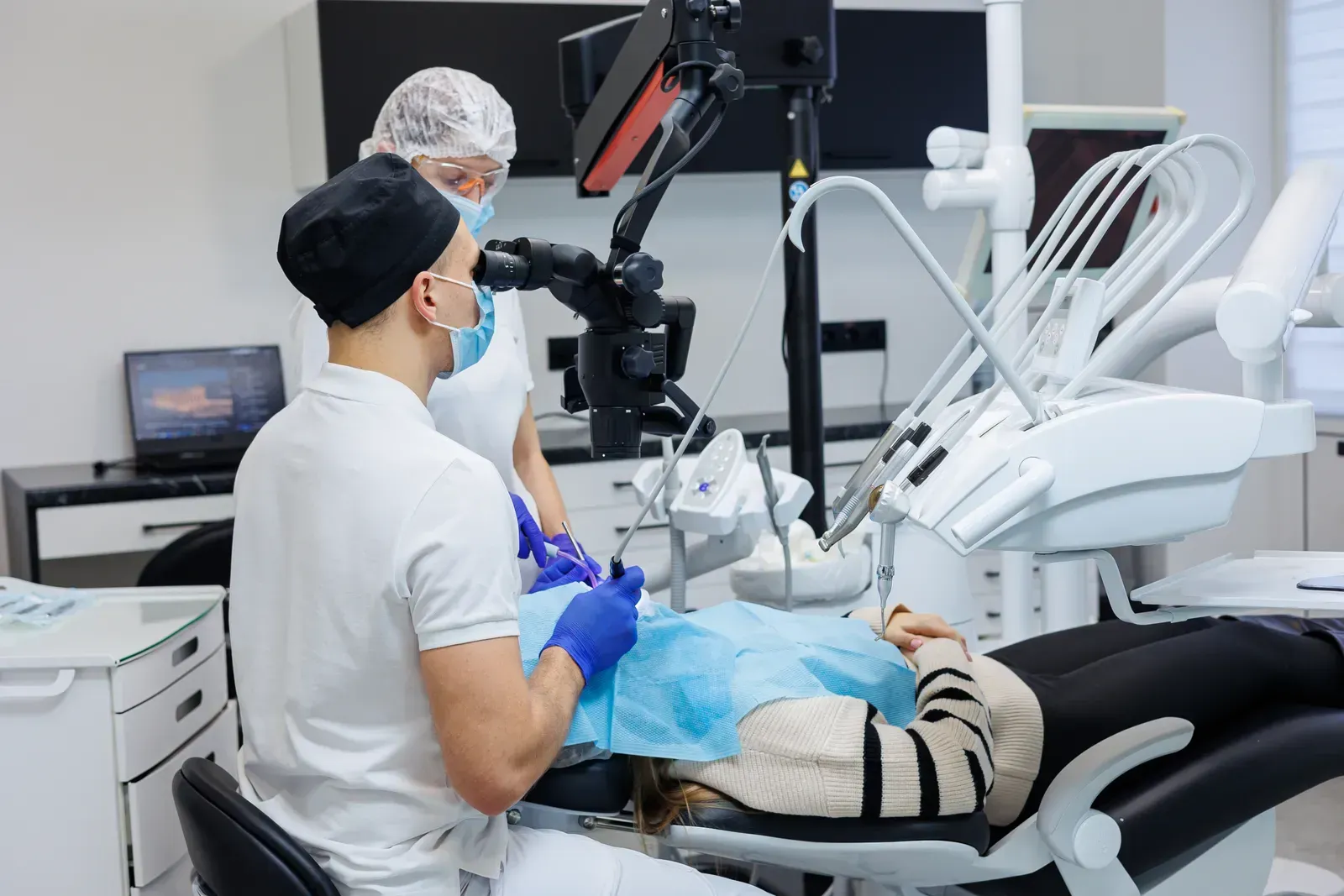
Successful root canal therapy does far more than mask a toothache for a few days. It addresses the infection at its source, allowing your body to heal and your tooth to function normally again for many years. Here is what patients in Eagle Mountain typically experience after treatment with our team.
Removing the infected or inflamed pulp tissue eliminates the source of the throbbing, pressure-sensitive pain that brought you in. Most patients notice the sharp discomfort is gone almost immediately, with mild soreness fading within a few days.
Keeping your own tooth preserves healthy bone structure and bite alignment far better than an extraction and replacement ever could. Your natural tooth continues to anchor neighboring teeth and support normal chewing forces.
Once the infection is cleared and the tooth is sealed and restored, you can bite and chew on that side again without flinching. This matters for everyday comfort as well as for maintaining a balanced, even bite long-term.
Treating the infected pulp prevents bacteria from traveling into the jawbone or forming an abscess. Catching and treating the problem early protects the surrounding teeth and gum tissue as well.
Chronic tooth pain is exhausting, especially when it intensifies at night. Removing that source of discomfort allows you to sleep through the night and concentrate during the day without a nagging ache in the background.
After the canal is cleaned and sealed, we restore the tooth with a crown or filling matched to your bite and shade. This final step protects the treated tooth from fracture and keeps your smile looking natural.
Infection inside a tooth does not always announce itself the same way for every patient. Some people feel a sharp, obvious pain, while others notice only a dull ache or a change in how a tooth looks. Watch for these signals and bring them to our attention sooner rather than later.
If hot coffee or cold water causes a sharp pain that lingers well after the stimulus is gone, the nerve inside the tooth may be inflamed or infected.
Sharp discomfort that occurs specifically when you apply pressure to a tooth often points to irritation or infection at the root tip.
A constant, low-grade ache that never fully goes away can indicate chronic inflammation deep inside the tooth, even without sharp pain spikes.
Puffiness, tenderness, or a small bump on the gum next to a specific tooth often signals an abscess that needs prompt attention.
A tooth that gradually turns gray or dark yellow compared to its neighbors may have nerve tissue that has died or is dying internally.
A recurring bump that drains and then returns is a fistula, a channel your body creates to relieve pressure from an infected root.
Tooth infections can refer pain outward, making the jaw, ear, or temple ache even though the source is a single tooth.
Trauma that exposes or comes close to the inner pulp opens the door for bacteria to enter, even if the crack itself is small.
Occasionally, an older filling placed close to the nerve can trigger inflammation months or years later, resulting in new sensitivity.
Because these symptoms can overlap with other dental issues, a thorough evaluation with digital X-rays is the only reliable way to confirm whether root canal therapy is needed. Waiting too long can turn a straightforward procedure into a more complex one, so we encourage Eagle Mountain patients to call us at the first sign of trouble.
Pulp infections rarely happen overnight. They usually build gradually from one or more contributing factors that allow bacteria to reach the sensitive tissue at the center of a tooth.
Cavities that progress past the enamel and dentin eventually reach the pulp chamber, introducing bacteria directly into the nerve tissue.
A tooth that has been filled, refilled, or restored multiple times is more vulnerable to irritation and eventual infection of the pulp.
A fall, sports injury, or biting down on something hard can create a fracture line that lets bacteria travel toward the nerve over time.
An older filling that leaks or breaks down at the edges can trap bacteria underneath, slowly leading to infection beneath the surface.
Advanced periodontal infection can travel along the root surface and reach the pulp chamber from below the gum line.
Even without an obvious crack, repeated minor impacts, such as from teeth grinding, can inflame the nerve enough to cause it to die.
In rare cases, a tooth that was previously treated can become reinfected if new decay forms or the original seal develops a small leak.
Every root canal we perform at Lake Mountain Dental follows a careful, patient-centered process designed to keep you comfortable from the first appointment through full recovery.
We start by hearing about your symptoms in your own words: when the pain started, what triggers it, and how it has affected your daily routine. This conversation guides exactly where we focus our exam.
We gently test the tooth's response to temperature and pressure and capture a digital X-ray to see the extent of decay or infection around the root tip. This gives us a clear picture before we recommend anything.
Once we confirm root canal therapy is the right path, we thoroughly numb the area so you feel pressure but not pain. A small opening is made through the top of the tooth to reach the infected pulp.
Using precise instruments, we remove the infected tissue, clean and shape the canals, and fill them with a biocompatible material that seals out future bacteria. This is the step that actually resolves the infection.
Most treated teeth need a crown or filling to restore strength and prevent fracture. We design this restoration to blend naturally with your bite and smile.
We check in to confirm the tooth is healing well and answer any questions as you return to normal eating and brushing habits. Routine checkups afterward help us monitor the tooth for years to come.
Many patients ask whether it would simply be easier to remove the infected tooth rather than treat it. In most cases, keeping your natural tooth is the better long-term choice. Natural teeth distribute chewing forces more evenly than an artificial replacement, and the root continues to stimulate the surrounding jawbone, which helps prevent the bone loss that often follows an extraction.
Once a tooth is removed, neighboring teeth can gradually shift out of position, and the bite can become uneven over time. Replacing an extracted tooth with a bridge or implant is also typically more involved and costly than completing root canal therapy on the tooth you already have. Root canal treatment addresses the infection directly while leaving your natural bone structure and bite relationships intact.
"Our goal is always to save the tooth you were born with whenever it is clinically possible. A tooth treated with root canal therapy and properly restored can function comfortably for decades."
Leaving an infected tooth untreated does not make the problem disappear; it allows bacteria to spread further into the bone, sometimes resulting in a painful abscess or the loss of the tooth altogether. Addressing the infection early, while it is still confined to the pulp, almost always produces a more predictable and comfortable outcome.
Simple habits at home can ease discomfort while you wait for your appointment and support healing once treatment is complete.
Avoid putting pressure on the affected tooth until it has been evaluated or treated, since biting on it can increase pain and risk further damage.
An appropriate dose of ibuprofen or acetaminophen can help manage discomfort before your appointment, following the package directions carefully.
Holding a cold pack against the outside of your cheek near the sore tooth can reduce swelling and take the edge off the ache temporarily.
A gentle warm saltwater rinse can soothe irritated gum tissue and help keep the area clean while you wait to be seen.
Steer clear of very hot or very cold foods and drinks, which can trigger sharp pain in a tooth with an inflamed or infected nerve.
Continue brushing and flossing carefully around the sore area rather than avoiding it entirely, since plaque buildup can make inflammation worse.
These measures can make you more comfortable in the short term, but they do not resolve an infection on their own. Professional evaluation and treatment are the only way to fully address the underlying problem.
Do not let a toothache take over another day. Our Eagle Mountain team is ready to evaluate your tooth, explain your options clearly, and get you out of pain as quickly as possible.
Lake Mountain Dental, Eagle Mountain, Utah • Call us at (801) 555-0123
Here are answers to the questions we hear most often from Eagle Mountain patients considering root canal treatment.
Modern root canal therapy is performed under local anesthesia, so the procedure itself is typically no more uncomfortable than getting a filling. Most of the pain patients experience actually comes from the infection beforehand, and treatment is what relieves it. Mild soreness around the area for a few days afterward is normal and manageable with over-the-counter pain relievers.
Most root canal procedures are completed in a single visit lasting between 60 and 90 minutes, depending on the tooth and the complexity of its root canal system. Molars with multiple canals can sometimes take a bit longer or occasionally require a second appointment. We will give you a realistic time estimate during your consultation.
We determine this through a clinical exam and digital X-rays that show how much healthy tooth structure remains and whether the root is still intact. In general, if enough of the tooth can be saved and restored, root canal therapy is preferred because it preserves your natural bite and bone structure. We will always walk you through the pros and cons of each option before recommending a path forward.
An untreated infection can spread beyond the tooth into the surrounding jawbone, leading to a painful abscess, swelling, and in some cases a more serious health concern. The tooth itself can also become unsalvageable, leaving extraction as the only remaining option. Addressing symptoms early almost always results in a simpler, more comfortable treatment.
Most teeth treated with root canal therapy, especially back molars, need a crown or substantial filling afterward to restore strength and prevent fracture. A tooth without its nerve can become more brittle over time, so a protective restoration helps it hold up to normal biting and chewing for years. We will discuss the best restoration option for your specific tooth.
Cost depends on which tooth is treated, since molars have more canals and take longer than front teeth, along with whether a crown is needed afterward. We provide a clear treatment estimate at your consultation and work with most dental insurance plans to help you understand your coverage. Our team is also happy to discuss flexible payment options.
With a proper restoration and good oral hygiene, a tooth treated with root canal therapy can last a lifetime for many patients. Regular checkups allow us to monitor the tooth and catch any new issues, such as a cracked restoration, before they become bigger problems. Avoiding habits like chewing ice also helps protect the tooth long-term.
We recommend waiting until the numbness fully wears off before eating to avoid accidentally biting your cheek or tongue. For the first day or two, sticking to softer foods and chewing on the opposite side gives the tooth time to settle, especially if it has only a temporary filling. Once a permanent restoration is placed, you can return to your normal diet.
Lake Mountain Dental
From routine cleanings to advanced care, our team is ready to welcome you and your family. Schedule your visit today - we'd love to see you smile.

 4342 E Pony Express Pkwy, Eagle Mountain, UT 84005

