 4342 E Pony Express Pkwy, Eagle Mountain, UT 84005

Losing one tooth or all of them changes more than your smile. It changes how you chew, how you speak, and often how confident you feel walking into a room. If you are weighing your options for replacing missing teeth, dentures and partials remain two of the most reliable, time-tested solutions in dentistry, and modern materials have made them far more comfortable and natural-looking than the ones your grandparents wore.
At Lake Mountain Dental, we talk with patients in Eagle Mountain every week who are unsure where to start. Some are missing a single tooth and curious about a removable partial. Others have been managing with failing teeth for years and are ready to consider full dentures. Both situations deserve a clear, honest explanation of the choices available, what each one costs in time and money, and how daily life changes once you have them.
This guide walks through the types of dentures and partials, how the fitting process works, what it takes to adjust, and how to keep your new teeth in good shape for the long haul. Our goal is to give you enough real information that your consultation becomes a conversation about your specific situation, not a crash course in dental terminology.
What Types of Dentures and Partials Are Available
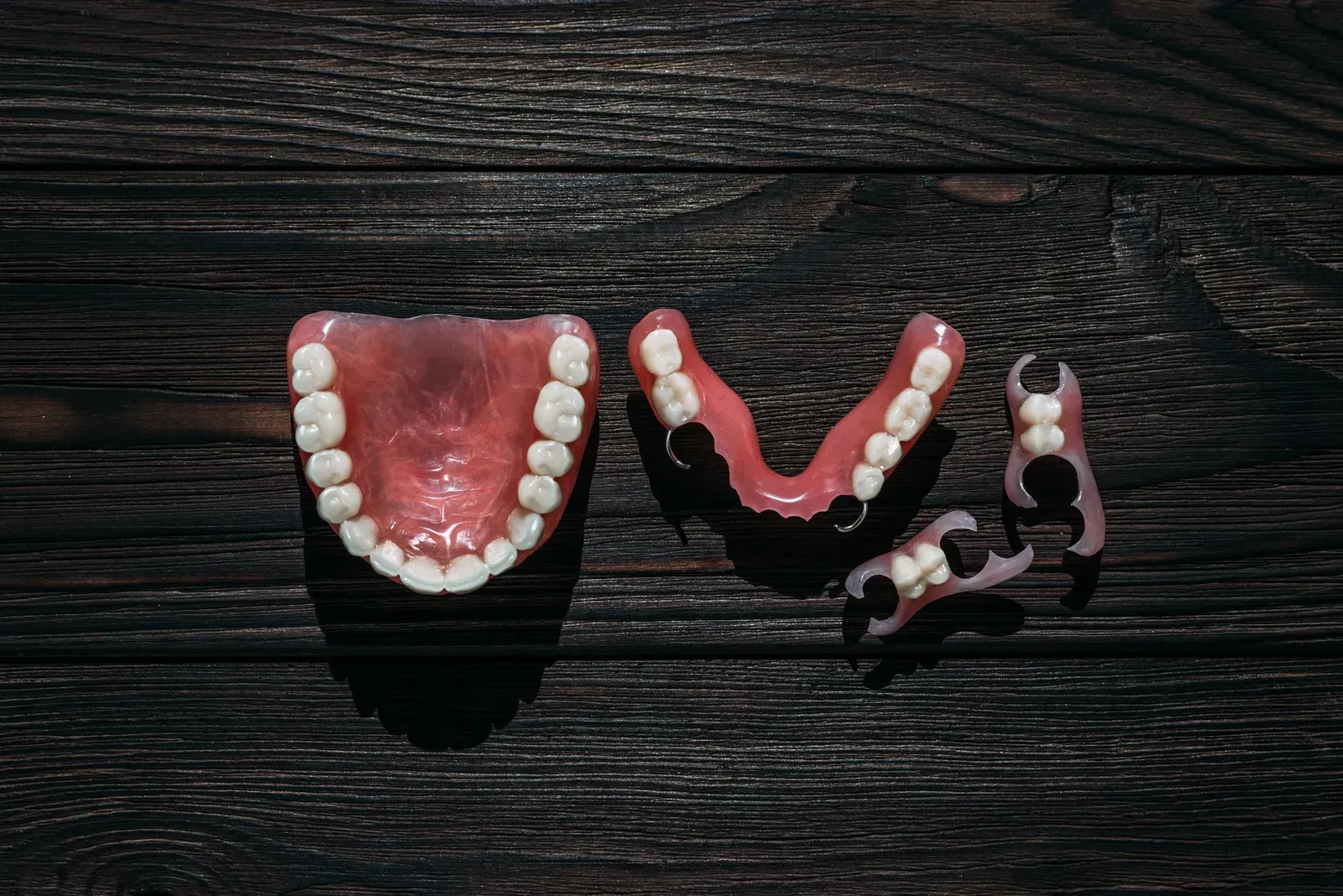
Not everyone missing teeth needs the same solution, which is part of why an in-person exam matters more than guessing from a photo online. Full dentures replace an entire arch of teeth, upper or lower, and rest directly on the gum ridge. Partial dentures fill in gaps when you still have healthy natural teeth remaining, using a metal or acrylic framework that clips onto those teeth for stability.
Within those two broad categories, there are meaningful variations. Conventional full dentures are placed after your gums have fully healed from extractions, usually several weeks out. Immediate dentures are fitted the same day teeth are removed, so you are never without teeth, though they typically need relining once the gums finish healing and shrinking. Removable partial dentures are the most common option for patients with several scattered gaps, while fixed partial options, including dental bridges, cement permanently in place for those who prefer not to remove an appliance at all.
For patients who want maximum stability, implant-supported dentures anchor to a small number of dental implants placed in the jawbone. This option significantly reduces the slipping and shifting that frustrates many conventional denture wearers, and it is worth discussing alongside dental implants if bone density and budget allow for it.
Who Is a Good Candidate for Dentures or Partials
Most adults who are missing one or more teeth, whether from decay, gum disease, injury, or simply years of wear, can be fitted with some form of denture or partial. The bigger question is which type fits your mouth, your budget, and your lifestyle. A thorough exam, including digital x-rays, lets us evaluate remaining bone, gum health, and the condition of any teeth you still have before recommending a path forward.
Patients with active gum disease or untreated decay generally need those issues addressed first, since a denture built over unhealthy tissue will not fit well or last long. This is one reason we often pair denture planning with periodontal care when gum disease is part of the picture. Age is rarely the deciding factor. We fit dentures and partials for patients in their forties through their nineties, and the right choice depends far more on oral health and jaw structure than on the calendar.
- Full arch tooth loss: If you are missing all teeth in an arch, conventional or implant-supported full dentures restore both function and facial support.
- Several scattered gaps: Removable partials are often the most practical and affordable way to fill multiple spaces at once.
- Adequate jawbone volume: Patients hoping for implant-supported stability need enough healthy bone, which we assess with imaging before recommending implants.
- Healthy remaining teeth: A removable partial relies on nearby natural teeth for anchoring, so those teeth need to be stable and decay-free.
What to Expect During the Fitting Process
Getting fitted for dentures or partials is a process, not a single appointment. It typically begins with a comprehensive exam and impressions of your mouth, which allow a dental lab to build a model of your bite. From there, we check the fit, shape, and color at several try-in visits before the final appliance is produced, making small adjustments each time to get the bite alignment and appearance right.
If teeth need to be removed before your dentures are made, we coordinate that extraction timeline carefully, whether through tooth extractions performed in our office or in combination with wisdom teeth removal when applicable. Immediate dentures are placed the same day as extractions so you leave with teeth in place, but they will need a reline appointment in the following months as swelling resolves and the gum ridge settles into its permanent shape.
For implant-supported dentures, the timeline runs longer because the jawbone needs several months to fuse securely around the implant posts before the final denture can be attached. We walk you through each stage so there are no surprises, and we schedule check-ins throughout the healing period rather than leaving you to guess whether things are progressing normally.
The First Few Months: Adjusting to New Dentures
New dentures feel unfamiliar at first, and that is completely normal. Many patients notice increased saliva production, minor speech changes, and a sense of bulkiness in the first few weeks. These sensations typically settle within one to two months as your cheek and tongue muscles learn to hold the appliance in place.
Eating takes some relearning too. We recommend starting with soft foods cut into small pieces, chewing evenly on both sides of your mouth, and gradually working back up to a normal diet as confidence builds. Reading aloud for a few minutes a day is a simple trick that helps many patients adjust their speech faster, since it forces the tongue and lips to work with the new appliance in a controlled way.
Sore spots are common in the early weeks and are usually resolved with a simple adjustment rather than a sign something is wrong. We ask new denture patients to come back within a week or two of receiving their appliance specifically to address any pressure points, because a denture that rubs the wrong way on gum tissue can lead to irritation if left unaddressed.
Daily Care and Maintenance That Extends Their Life
Dentures and partials need daily attention, just like natural teeth do, though the routine looks a little different. Food particles and plaque still build up on the surface of an appliance, and leaving them uncleaned can lead to bad breath, gum irritation, or staining that becomes hard to remove later.
A Simple Daily Routine That Works
Rinse your dentures after every meal to remove loose food debris, and brush them at least once a day with a soft-bristled brush and a non-abrasive denture cleaner rather than standard toothpaste, which can be too harsh on the material. At night, most dentures should come out so your gums get a rest and your appliance can soak in a cleaning solution, which also helps it hold its shape. Keep brushing your gums, tongue, and any remaining natural teeth gently each morning to support overall oral health, and continue attending regular checkups so we can monitor fit and catch early signs of wear.
Your jawbone and gum ridge continue to change shape slowly over the years, even after tooth loss has stabilized, which means a denture that fit perfectly at delivery can gradually loosen. Scheduling a yearly exam at our Eagle Mountain office lets us catch that shift early and reline or adjust your appliance before loose fit turns into discomfort or sore spots.
Cost, Insurance, and How Long Dentures Last
Cost is one of the first questions almost every patient asks, and it depends heavily on which type of appliance fits your needs. A basic removable partial generally costs less than a full denture, and a conventional full denture costs less than an implant-supported one, though the implant option often delivers the strongest bite force and the least day-to-day movement.
Many dental insurance plans cover a portion of denture or partial costs, particularly under major restorative benefits, and we are glad to help you understand your specific coverage before treatment begins so there are no surprises on the bill. With proper care, a well-made full or partial denture typically lasts five to ten years before it needs replacement or a significant reline, though daily wear, weight changes, and natural bone remodeling can shorten that window for some patients.
If you are also dealing with jaw discomfort or clenching alongside missing teeth, it is worth mentioning during your consultation, since some patients benefit from combining denture treatment with a conversation about sleep-related bite issues that can affect how an appliance fits over time.
Key Takeaways
- Full dentures replace an entire arch, while removable or fixed partials fill gaps when healthy natural teeth remain.
- Implant-supported dentures offer the most stability but require sufficient jawbone and a longer healing timeline.
- An adjustment period of one to two months is normal, and early follow-up visits resolve most sore spots quickly.
- Daily rinsing, brushing, and overnight soaking significantly extend the life of any appliance.
- Most dentures last five to ten years before needing a reline or replacement, making annual checkups important.
Frequently Asked Questions
Can I eat normally with dentures right away?
Not immediately. Most patients start with soft foods and gradually reintroduce firmer foods over several weeks as they get used to chewing with the new appliance. Cutting food into smaller pieces and chewing evenly on both sides of your mouth speeds up the adjustment.
Will people be able to tell I'm wearing dentures?
Modern dentures are designed and shaded to match your natural gum tone and remaining teeth, so a well-fitted appliance is very difficult for others to notice. Proper fit also matters cosmetically since a loose denture can shift and look unnatural, which is why regular adjustment appointments matter.
How are partial dentures different from a bridge?
A removable partial denture clips in and out and relies on clasps around nearby teeth, while a dental bridge is cemented permanently in place and does not come out. Bridges typically require reshaping the adjacent teeth to support crowns, whereas partials place less long-term demand on those teeth.
Do dentures need to be replaced over time?
Yes, most dentures need relining, rebasing, or full replacement every five to ten years as your gum ridge and jawbone naturally change shape. Waiting too long to replace a worn or loose denture can lead to sore spots, bite problems, and faster bone loss.
Is it painful to get fitted for dentures?
The fitting process itself is not painful, though there may be mild discomfort during the healing period after extractions if an immediate denture is used. Any sore spots from the appliance rubbing against gum tissue are typically resolved quickly with a simple in-office adjustment.
Finding the Right Fit for Your Smile
Choosing between a partial, a full denture, or an implant-supported option is rarely obvious from a web search alone, because so much depends on your gum health, bone structure, and daily habits. What matters most is getting an honest assessment from a dentist who takes the time to examine your mouth, explain the trade-offs clearly, and build an appliance that actually fits the way your mouth works.
Our team at Lake Mountain Dental has guided patients across Eagle Mountain through every stage of this process, from the first exam through fitting, adjustment, and years of ongoing maintenance. If missing teeth have been affecting how you eat, speak, or smile, we would be glad to talk through your options in a consultation built around your specific mouth and your specific goals.